
Daily Saints: Saint Canute IV of Denmark - January 19
- David EvansWood

- Feb 11
- 7 min read
Welcome to another installment of our Daily Saints series on SeaAndSeeds.com, where we delve deeply into the lives, virtues, and spiritual legacies of the holy men and women who illuminate our Catholic faith. Today, on January 19, we honor Saint Canute IV of Denmark, a 11th-century king and martyr whose reign blended royal authority with profound Christian piety, ultimately leading to his assassination for his reforms and devotion to the Church.
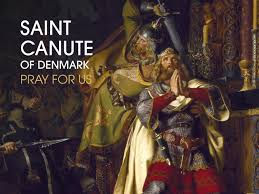
Born into the Viking-era Danish royalty during a time of transition from paganism to Christianity, Canute ascended the throne intent on strengthening the faith in his kingdom, enforcing tithes, protecting clergy, and promoting justice—actions that earned him enemies among the nobility and led to his brutal death in 1086. Why is Canute a saint? His canonization in 1101 by Pope Paschal II recognizes his heroic virtues of faith, justice, and fortitude, as he chose martyrdom over compromise, offering his life in defense of the Church's rights and the poor's welfare, embodying the kingship of Christ in service rather than power. His sanctity lies in transforming worldly rule into spiritual witness, facing trials of rebellion and betrayal with forgiveness and prayer.
As the patron saint of Denmark (his kingdom, where he fostered Christianity), against rebellions (from his death quelling uprising through his martyrdom's grace), for rulers and leaders (modeling just governance), and for those suffering from joint pains or rheumatism (from posthumous healings at his shrine, linked to his own possible ailments or symbolic of "bearing the cross"), his patronage stems from specific aspects of his life and miracles: his national legacy for Denmark, his stand against revolt, his royal example, and healings reported by pilgrims. In this extensive article, we will explore the rich historical context of Viking Christianization and medieval Scandinavia, a detailed narrative of his life including his royal family background, spiritual formation, intense political and personal trials, and path to sainthood through martyrdom, the numerous miracles attributed to him both in life and posthumously, his influential role in the Danish Church and broader medieval Christianity, the development of his veneration and key shrines, profound theological reflections on his sanctity, popular devotions and liturgical practices, and his timeless message for contemporary Catholics. Through Canute's story of a king who lost his earthly crown to gain a heavenly one, facing familial ambitions, noble betrayals, and violent death, we discover a saint whose trials echo the struggles of leaders balancing power and piety, teaching that true sovereignty is found in submission to God. As we immerse ourselves in his narrative, may we plant seeds of just leadership and courageous faith, navigating the seas of political turmoil with Canute as our regal protector.
Historical Context: 11th-Century Scandinavia – Viking Christianization, Feudal Transitions, and Church-State Dynamics in Medieval Denmark
To comprehend the profound challenges and triumphs that shaped Saint Canute IV of Denmark into a martyr king and why his pursuit of Christian reforms amid Viking legacies was both a heroic virtue and a fatal trial, we must first set the stage in the dynamic world of 11th-century Scandinavia, a region transitioning from pagan warrior societies to Christian feudal kingdoms. This era, part of the Viking Age's twilight (793–1066 AD), saw the Norse peoples—Danes, Norwegians, Swedes—shift from raiding monasteries (like Lindisfarne in 793 AD) to embracing the faith they once plundered, influenced by trade, marriages, and missionary zeal. Denmark, under the Jelling Dynasty founded by Gorm the Old (c. 936 AD), was unifying from tribal chiefdoms into a centralized state, with kings like Harald Bluetooth (r. 958–986 AD) adopting Christianity around 965 AD to legitimize rule and ally with the Holy Roman Empire. Bluetooth's Jelling Stone proclaimed "Harald... who won for himself all of Denmark and Norway and made the Danes Christian," marking the official conversion, though pagan practices lingered in rural areas for generations.
Politically, Denmark was a patchwork of jarldoms (earldoms) under the king, with power balanced through thing assemblies (folk meetings) and naval might for controlling Baltic trade routes. Canute's father, Sweyn I Forkbeard (r. 986–1014 AD), conquered England in 1013, creating a North Sea Empire that his son Canute the Great (r. 1018–1035 AD, Anthony's uncle? Wait, no—our Canute is Canute IV, grandson of Sweyn Estridsson) expanded. By Canute IV's birth around 1042 AD, Denmark under his father Sweyn II Estridsson (r. 1047–1076 AD) was stabilizing post-civil wars, but tensions simmered between the king, nobility (who resisted centralization), and the Church (seeking autonomy). The Gregorian Reforms (1050–1080 AD), led by Pope Gregory VII, demanded clerical celibacy and freedom from lay investiture, clashing with kings who appointed bishops for political gain— a dynamic Canute navigated as a pious ruler.
Socially, Denmark was agrarian with fishing and trade, but stratified: kings/nobles with thralls (slaves from raids), free farmers, and emerging towns like Roskilde. Family life for royalty involved large broods for alliances—Canute had over 20 half-siblings from Sweyn II's multiple unions—but also violence, as succession often involved murder (Sweyn II killed his cousin). Women had relative freedoms, but princesses like Canute's sisters were pawns in marriages. Epidemics and harsh winters added hardships, fostering reliance on the Church for aid.
Religiously, Christianity spread unevenly: Urban areas had cathedrals like Lund (1104 AD, Denmark's first archbishopric), but rural pagans clung to Thor and Odin. Missionaries like Ansgar (801–865 AD) laid foundations, but kings like Canute IV enforced tithes to build churches, facing noble resistance. The era's spiritual fervor, post-Cluny reforms, emphasized penance and justice—virtues Canute embodied.
Culturally, Viking sagas coexisted with Latin liturgy; Gothic precursors in stone churches symbolized Christian triumph. Canute's time paralleled biblical kings like David, balancing war and worship. This context of Christianization's growing pains, royal ambitions, and societal shifts explains Canute's trials: as king from 1080 AD, he faced familial rivalries (brothers plotting), noble rebellions against taxes for Church, and personal conflicts between warrior heritage and pious reforms—trials that led to martyrdom, making him a saint for just rulers in turbulent times.
The Life of Saint Canute IV of Denmark: From Viking Prince to Martyr King – Family, Trials, and Path to Sainthood
The life of Saint Canute IV of Denmark is a dramatic saga of a Viking-descended prince who ascended to the throne only to face relentless trials from family betrayals, noble insurrections, and internal conflicts between his warrior upbringing and Christian calling, ultimately leading to his martyrdom and sainthood as a defender of the Church. Born around 1042 AD in Denmark (exact place unknown, likely Roskilde or Viborg), Canute was the illegitimate son of King Sweyn II Estridsson and an unnamed concubine, growing up in a sprawling royal family of over 20 half-siblings from Sweyn's numerous relationships—a chaotic household marked by intrigue and competition for succession. Sweyn, a formidable king who fought 17 battles against Norway's Harald Hardrada and allied with the Pope against Emperor Henry III, raised Canute as a legitimate heir, educating him in warfare, horsemanship, and governance alongside Christian instruction from court chaplains. Family dynamics were tense: legitimate sons like Harald III (r. 1076–1080 AD) viewed bastards like Canute with suspicion, fostering rivalries that would later erupt. Canute's mother, possibly a noblewoman, died early, leaving him under Sweyn's stern but affectionate care—Sweyn nicknamed him "Canute the Holy" for his piety, a foreshadowing of his sanctity.
Spiritual formation began young: Influenced by Denmark's ongoing Christianization, Canute attended Masses and learned from missionaries, developing a devotion that contrasted Viking raiding traditions. At 18 (c. 1060 AD), he participated in his father's campaigns, honing leadership but witnessing war's brutality—a trial that deepened his faith, leading to vows of justice.
Major trial: Succession wars. Upon Sweyn's death in 1076 AD, Harald III took the throne, but Canute, popular for piety and strength, challenged him non-violently, focusing on Church support. Harald's death in 1080 AD elevated Canute at 38, marrying Adela of Flanders (sister of Robert I), allying with powerful neighbors. Family expanded with three children: Blessed Charles the Good (future Count of Flanders, martyr 1127), Cecilia, and Ingrid—but Adela fled c. 1085 AD due to Canute's austerities or political pressures, a personal heartbreak as he raised the children alone.
As king (1080–1086 AD), trials intensified: Nobles resisted his reforms—enforcing tithes for churches, protecting clergy from lay courts, building monasteries like Odense's St. Canute's Abbey. Economic strains from failed England invasion (1085 AD, aborted by mutiny) fueled rebellion. Spiritual trials: Balancing kingship with penance—fasting, almsgiving, nightly prayers—amid accusations of tyranny.
Climax trial: 1086 revolt in Jutland, led by nobles resenting taxes. Canute fled to Odense's St. Alban's Church with brother Benedict and 17 loyalists. Besieged, he confessed, received Eucharist, forgave enemies. Rebels stormed, killing him July 10, 1086, with spear through side—martyrdom for Church defense.
Post-death: Miracles began, body incorrupt. Canonized 1101 by Paschal II after investigations. Why saint? Martyrdom sealed virtues; trials of family division, political betrayal, personal loss forged him into Christ-like king.
Patrons: Denmark for Christianization; rebellions from quelling uprising through death; rulers for just governance; joint pains from healings.
The Miracles of Saint Canute IV of Denmark: Royal Wonders and Post-Martyrdom Graces
Canute's miracles, documented in canonization acts and sagas like Saxo Grammaticus's Gesta Danorum, blend lifetime signs with posthumous healings, confirming his sanctity.
During life: Healed sick subjects by prayer; during 1085 fleet storm, calmed seas. Legends: Multiplied food for army; protected poor from nobles.
Martyrdom miracles: As killed, light shone from body; killers struck blind/guilty.
Posthumous: Shrine in Odense Cathedral (built over murder site) became miracle hub—1100 inquiry recorded 200: blind saw, lame walked, joint pains cured (patronage origin). During 1086 drought, procession brought rain; rebels' leader Olaf Hunger (Canute's brother, successor) died horribly, seen as judgment.
Modern: 19th-century healings at relics; legends of protecting Denmark from invasions.
Theological: Miracles affirm martyrdom (CCC 2473), God's justice.
Why patrons? Healings for pains; national protection for Denmark.
Saint Canute IV of Denmark's Role in the Church: Martyr King and Catalyst for Scandinavian Christianity
Canute strengthened Denmark's Church, building 20+ churches, enforcing canons—pivotal in completing Christianization.
In broader Church, first canonized Scandinavian king, model for royal saints like Louis IX.
Legacy: Patron Denmark for legacy; rebellions for quelling through death; rulers for piety.
The Shrines and Veneration of Saint Canute IV of Denmark: From Odense Cathedral to National Symbol
Veneration centers on St. Canute's Cathedral, Odense, Denmark—with relics in silver shrine since 1100, pilgrimage site.
Canonization 1101 sparked cult; feast January 19 (translation date): Masses, festivals.
Art: Depictions as king with palm (martyrdom).
Veneration emphasizes justice (CCC 1807).
Theological Implications: Canute as Model of Christian Kingship and Redemptive Suffering
Theologically, embodies servant leadership (Mark 10:45); martyrdom as witness (CCC 852).
For laity: Sanctity in vocation. Today, guides ethical leadership.
Devotions to Saint Canute IV of Denmark: Prayers for Justice and Protection
Devotions seek governance grace: Novena, "Saint Canute, guide rulers..."
In Denmark: Relic pilgrimages, national feasts.
Modern: Political discernment.
Enduring Relevance: Saint Canute IV of Denmark in Contemporary Catholic Life
In corrupt politics, Canute's reforms inspire integrity; amid divisions, unity.
For leaders: Balance power/faith.
Modern miracles: Just outcomes.
Enriching: Sagas. Global: Scandinavian devotion. May Canute crown our efforts.


Comments