
Daily Saints: Saint Porphyry of Gaza: The Patient Bishop Who Transformed a Pagan Stronghold
- David EvansWood

- 4 days ago
- 4 min read
On February 26, Catholic and Orthodox tradition honors Saint Porphyry (c. 347–420), the resolute bishop who, through persistent prayer, imperial support, and miraculous signs, led the conversion of Gaza—one of the last great pagan citadels in the late Roman Empire—from idolatry to Christianity. Though the modern Roman Calendar marks this Thursday in the First Week of Lent as an ordinary weekday, Porphyry's ancient feast day endures in many local churches and hagiographical sources, offering profound Lenten inspiration: in a city steeped in darkness and hostility, he embodied patient endurance, trusting God's timing to bring "rain" upon spiritually barren souls.

Saint Porphyry's vita, preserved by his deacon Mark, paints a portrait of episcopal zeal tempered by humility. Facing violent opposition yet refusing force, he conquered through charity and divine intervention. In Lent 2026, as we confront personal and communal "droughts"—sin, doubt, division—Porphyry teaches reliance on prayer over human power.
Birth and Early Life in Thessalonica
Porphyry was born around 347 in Thessalonica, a thriving Macedonian city, to a wealthy noble family. Educated in rhetoric and classics, he enjoyed privilege but felt drawn to asceticism.
At age 25, disillusioned with worldly pursuits, he renounced inheritance and fled to Egypt's Scete desert, joining monks famed for spiritual combat. For five years, he lived in a cave, practicing severe fasting, vigils, and manual labor while studying Scripture.
Health issues—likely liver ailment from asceticism—forced relocation to Jerusalem around 378. There, he dwelt in the Jordan valley, visiting holy sites and befriending Saint Jerome (briefly in the Holy Land).
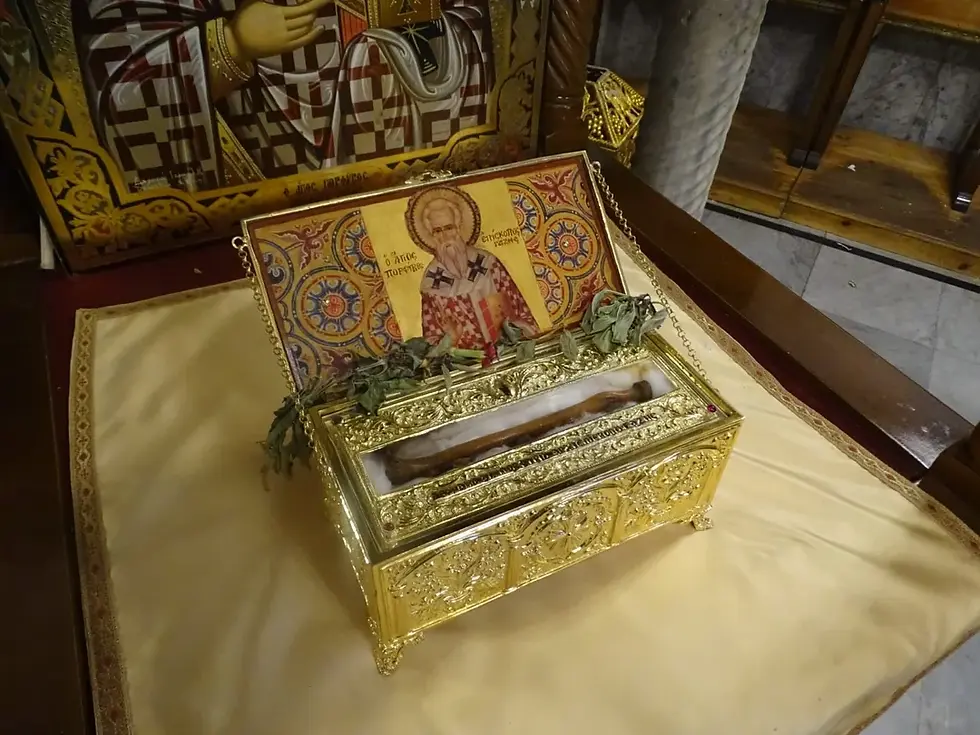
In Jerusalem, Porphyry supported himself copying manuscripts. A miraculous healing occurred: paralyzed for years, he prayed at Calvary; Christ appeared in vision, restoring strength. This deepened devotion to the Cross.
Priesthood and Reluctant Call to Gaza
Around 392, Jerusalem's bishop ordained Porphyry priest and entrusted him guardianship of the True Cross relic. Humble Porphyry accepted reluctantly.
In 395, Gaza's bishop died. Though predominantly pagan—famous for the Marneion temple to Zeus-Marnas—Gaza had a small Christian minority suffering persecution.
Metropolitan John of Caesarea, guided by vision, selected Porphyry successor. At 48, Porphyry protested unworthiness but obeyed. Consecrated bishop, he arrived in Gaza with deacon Mark, facing a hostile city where Christians endured mockery, exclusion, and violence.

Challenges in a Pagan Stronghold
Late 4th-century Gaza was a sophisticated Hellenistic center: philosophers, rhetoricians, and fervent pagan cults. The Marneion, ornate temple, served as focal point for sacrifices and oracles. Pagans believed Marnas protected the city; Christians closing it risked divine wrath like drought or invasion.
Porphyry faced immediate opposition. Pagan mobs barred churches, assaulted clergy, and petitioned authorities against Christians. Women and children endured particular harassment.
Undeterred, Porphyry preached charity, visited sick, and instructed catechumens. He built small church but knew deeper change required divine intervention.
The Great Drought and Miracle of Rain
A seven-year drought devastated Gaza around 396–401. Crops failed, famine loomed. Pagans sacrificed vainly at Marneion; oracles silent.
Christians gathered secretly; Porphyry led all-night vigils and processions with the Cross. One Easter eve, he organized children—innocent like biblical innocents—to process praying Kyrie eleison.
Suddenly, clouds gathered; abundant rain fell. Pagans astonished; many converted, acknowledging Christian God's power. Baptisms surged; pagan prestige cracked.
This miracle—echoing Elijah (1 Kgs 18)—marked turning point. Porphyry's patient prayer prevailed where force failed.

Imperial Intervention and Closing of Temples
Residual pagan resistance remained strong. Porphyry traveled to Constantinople in 401 with Caesarea's bishop, seeking Emperor Arcadius's aid.
Through deacon Mark's connections and Saint John Chrysostom's influence, they met Empress Eudoxia—devout and pregnant. Porphyry prayed over her; she promised support if bearing son. Prince Theodosius born; Eudoxia sent funds for grand church and imperial edict closing Gaza's temples.
Returning triumphantly, Porphyry enforced decree peacefully. Marneion purified by fire (miraculously contained), site became Eirene church ("Peace"), cruciform marvel.
Remaining temples closed; idols destroyed. Conversions accelerated; Gaza transformed into Christian city.
Pastoral Care and Further Miracles
As bishop, Porphyry emphasized catechesis, charity, and liturgy. He founded hospices, ransomed captives, and reconciled factions.
Miracles continued:
Healing pagan Cornelia's hemorrhaging son, leading family conversion.
Exorcising demons.
Prophetic warnings saving lives.
He ordained worthy priests, combated lingering superstitions, and promoted monasticism.
Final Years and Holy Death
Advanced age and asceticism weakened Porphyry. Foretelling death, he died peacefully February 26, 420, aged 73.
Buried in Eirene church, cult spread rapidly. Mark's vita, eyewitness account, preserves legacy.
Legacy: From Pagan Citadel to Christian Center
Porphyry's episcopate (395–420) completed Gaza's Christianization. City became theological hub; saints and scholars emerged.
Church of Saint Porphyry—built on Marneion site—stands ancient, one of Gaza's oldest, enduring witness despite trials.
Venerated East and West, feast February 26 honors patience and prayer in evangelization.
Lenten Spirituality: Prayer That Brings Rain to Dry Hearts
Lent's desert mirrors Gaza's drought. Porphyry teaches persistent prayer and fasting soften hardened hearts.
His refusal of violence aligns with Christ's "love enemies" (Mt 5:44). Conversions came through grace, not coercion.
In personal Lenten struggles—temptation, aridity—his example urges trust: God sends rain in due season.
Practices honoring him:
All-night vigils or extended adoration.
Processions with Cross during Lent.
Praying for unbelievers' conversion.
Offering "droughts" (sacrifices) for spiritual fruit.
Reading vita during Scripture meditation.
A Bishop's Patient Victory
Saint Porphyry of Gaza demonstrates prayer's triumph over paganism—and sin. From drought to deluge, hostility to harmony, his life proclaims: "Ask... seek... knock" (Mt 7:7).
In Lent 2026, may his intercession bring rain to our souls, preparing abundant Easter harvest.
Prayer to Saint Porphyry
O Saint Porphyry, patient bishop and wonder-worker, you who transformed Gaza through prayer and perseverance, intercede for us. In our spiritual droughts, obtain heavenly rain of grace. Teach us to conquer evil with charity, trusting divine providence. Amen.


Comments