
Daily Saints: Saint Thomas Aquinas - January 28
- David EvansWood

- Feb 11
- 5 min read
In the shadow of a towering Italian castle, where the winds whispered secrets through ancient stone walls and the sun painted the hills of Roccasecca in golden hues, a child was born who would one day bridge the chasm between human reason and divine mystery. This is the epic tale of Saint Thomas Aquinas, the "Angelic Doctor," whose life unfolded like a grand philosophical quest— from a noble boy's defiant choice of beggar's robes over a princely abbey, through harrowing family abductions, relentless intellectual battles, and sublime mystical visions that left him speechless. Imagine a silent giant, mocked as the "Dumb Ox" for his ponderous build and quiet demeanor, yet whose mind roared with the clarity of angels, producing tomes that still guide the Church through storms of doubt.
Thomas's story is not just of ink and parchment but of a soul forged in the fires of trial, showing us why he became a saint whose wisdom continues to light the path for seekers everywhere. As we wander through the chapters of his life, let the narrative draw you into a world where a single vision can render the greatest works "as straw," inviting us to ponder our own quests for truth amid the clamor of modern life.
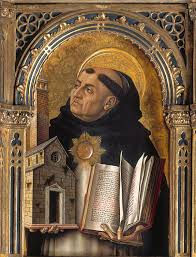
Our story opens in the year 1225, in the fortified halls of Roccasecca Castle near Aquino, southern Italy, where the air was thick with the scent of olive groves and the echoes of knightly training. Thomas was born to Landulf of Aquino, a fierce Lombard knight sworn to Emperor Frederick II, and Theodora Rossi, a noblewoman from Neapolitan lineage connected to imperial blood. The Aquino family was a powerhouse—Landulf's brothers were warriors and abbots, his sisters abbesses—and Thomas, the youngest of nine children, was destined for greatness. Family life was a whirlwind of privilege: Siblings like Aimo, who joined the Teutonic Knights and faced martyrdom in battle, or Marotta, who became an abbess, filled the castle with tales of glory. But young Thomas, chubby and introspective, preferred books to swords, earning early nicknames that hinted at his different path.
Spiritual whispers began early. At age 5, Thomas was sent to the Benedictine abbey of Monte Cassino, a majestic mountaintop fortress of learning founded by Saint Benedict himself. Here, amid chanting monks and illuminated manuscripts, his formation took root—studying grammar, logic, and the Psalms, his mind absorbing knowledge like parched earth drinking rain. But trials loomed like storm clouds: At 14, in 1239, imperial troops besieged the abbey in Frederick II's war with the Pope, forcing Thomas home—a disruption that tested his budding vocation.
The greatest family trial erupted at 19, in 1244, when Thomas, inspired by the preaching of Dominican friar John of Wildeshausen, joined the mendicant Order of Preachers in Naples. The Dominicans, founded by Saint Dominic in 1216 to combat heresies through poverty and preaching, appealed to Thomas's intellect and heart. But his noble family exploded in fury— they had planned for him to become abbot of Monte Cassino, securing power and wealth. His brothers, soldiers loyal to the emperor, ambushed him on the road to Paris, kidnapping him and imprisoning him in Roccasecca Castle for over a year. Imagine the drama: Locked in a tower, Thomas faced relentless pressure—his mother Theodora pleading tears, siblings mocking his "beggar's rags," and even a temptress sent to seduce him from vows. In a vivid act of defiance, Thomas grabbed a burning brand from the fire, chasing her away and tracing a cross on the door— a miracle followed as angels girded him with a chord of purity, granting lifelong chastity. This trial of confinement and temptation, lasting until 1245 when the Pope and emperor intervened for his release, forged his resolve like steel in fire.
Freed, Thomas journeyed to Paris and Cologne, studying under Saint Albert the Great, who prophesied, "This Dumb Ox's bellowing will fill the world!" At 31, in 1256, he earned his doctorate in theology at the University of Paris, beginning a whirlwind of teaching, writing, and debating. Trials of intellect followed: At Paris, he defended mendicants against secular masters who envied their popularity, his Contra Impugnantes a masterful rebuttal. Physical trials plagued him—obesity from sedentary study caused mobility issues, and overwork led to exhaustion, but he offered it all for souls.
Theological triumphs amid trials: Summoned by popes, Thomas composed the Summa Contra Gentiles (1259–1265) for missionaries to non-Christians and the Summa Theologica (1265–1274), a colossal work reconciling Aristotle's philosophy with faith, addressing everything from God's existence to ethics. But mystical trials interrupted: On December 6, 1273, during Mass, a vision of Christ left him in ecstasy, declaring his work "well written." Afterward, Thomas ceased writing, confiding to Reginald, "All I have written seems straw compared to what I have seen"— a trial of humility, silencing the greatest mind.
Final trial: In 1274, en route to the Council of Lyon at Pope Gregory X's request, Thomas fell ill after striking his head on a branch, dying March 7 at Fossanova Cistercian abbey at 49. Path to sainthood: Miracles erupted—body incorrupt, healing touches; canonized 1323; Doctor 1567.
Family trials of abduction shaped obedience; intellectual mockery, humility; mystical silence, wisdom—saint for sanctified reason.
Patrons: Theologians/scholars from works; storms from miracle; chastity from girdle.
The Miracles of Saint Thomas Aquinas: Heavenly Affirmations and Earthly Healings
Thomas's miracles, vividly chronicled in his canonization inquiry (over 300 witnesses), blend intellectual graces with physical healings, illustrating divine favor on his reasoned faith.
During life: The girdle miracle (1244 AD)—amid temptation, angels bound him with chord, granting chastity, a burning sensation marking purity. Storm calm (c. 1250 AD Naples voyage)—prayer stilled tempest, saving ship. Healed sick friars by touch; ecstasies revealed truths.
Posthumous: Body incorrupt, fragrant; sliced for relics, wounds healed touchers. Fossanova healings—blind friar saw; 1323 bull cited resurrections, cures.
Legends: "Dumb Ox" bellowed in debate; mute spoke.
Theological: Miracles affirm intellect's sanctification (CCC 35).
Why patrons: Healings link to ailments; works to scholars.
Saint Thomas Aquinas's Role in the Church: The Angelic Doctor and Architect of Catholic Thought
In a Church grappling with Aristotle's influx, Thomas's synthesis—faith and reason as allies—became its cornerstone, his Summa guiding councils like Trent.
Role: Dominican teacher, papal advisor; influenced ethics, sacraments.
Legacy: Patron theologians/students for Summa; universities for Paris role.
The Shrines and Veneration of Saint Thomas Aquinas: From Fossanova Abbey to Scholastic Honor
Veneration centers on Church of the Jacobins, Toulouse—with main relics (transferred 1369); Fossanova abbey site of death.
Canonization 1323; feast March 7, moved January 28 (1969).
Tradition: Thomistic conferences.
Art: Gozzoli's triumph painting.
Veneration emphasizes reason (CCC 156).
Theological Implications: Thomas as Model of Faith Seeking Understanding and Humble Genius
Theologically, teaches five ways to God's existence; Eucharist transubstantiation (CCC 1376).
For all: Universal intellect. Today, dialogues science/faith.
Devotions to Saint Thomas Aquinas: Prayers for Insight and Purity
Devotions seek wisdom: Novena, "Saint Thomas, enlighten us..."
Girdle replicas for chastity.
Modern: Exam blessings.
Enduring Relevance: Saint Thomas Aquinas in Contemporary Catholic Life
In doubt-filled times, Thomas's reason offers anchor; trials inspire intellectuals.
For students: Overcome labels.
Modern miracles: Clarity in confusion.
Enriching: Summa summaries. Global: Thomism. May Thomas angelically guide us.


Comments