
Daily Saints: Saint Walburga: The Anglo-Saxon Abbess Whose Healing Oil Flows Through the Ages
- David EvansWood

- 5 days ago
- 6 min read
On February 25, the Church remembers Saint Walburga (c. 710–779), the remarkable Anglo-Saxon missionary, Benedictine abbess, and wonder-worker whose relics continue to exude a miraculous healing oil more than twelve centuries after her death. Though her commemoration is not part of the universal calendar's obligatory observances, February 25—her dies natalis (heavenly birthday)—remains a day of profound devotion in many Catholic communities, especially in Germany, England, and Benedictine foundations worldwide.
In 2026, this date falls on a Wednesday in the First Week of Lent, a season of penance, purification, and preparation for Easter. Saint Walburga's life of radical detachment, missionary zeal, and intercessory power offers rich meditation during Lent: just as she brought Christ's light to pagan darkness and healing to the afflicted, we are called to allow grace to flow through our penitential practices, cleansing spiritual wounds and protecting us from the "storms" of temptation and sin.

Walburga's story bridges the early medieval Church's golden age of Anglo-Saxon missionaries with enduring Eucharistic and Marian devotion. Her miraculous oil—scientifically inexplicable yet Church-approved—stands as one of the most persistent physical signs of sanctity in Catholic history, drawing pilgrims seeking physical and spiritual healing.
A Holy Family in Anglo-Saxon England
Saint Walburga was born around 710 in the Kingdom of Wessex, in what is now Devonshire, England. She came from one of the most extraordinary holy families in Church history. Her father was Saint Richard the Pilgrim (or Richard of Wessex), an under-king who renounced worldly power for pilgrimage. Her mother, Winna (or Wuna), was related to Saint Boniface, the great Apostle of Germany. Walburga's brothers were Saints Willibald and Winibald, both missionaries and bishops.
This family exemplified the vibrant faith of 8th-century England, often called the "Age of Saints." Bede's Ecclesiastical History describes a land teeming with monasteries and missionary fervor. Richard, planning a pilgrimage to Rome and the Holy Land with his sons, entrusted eleven-year-old Walburga and younger brother Winibald to the renowned double monastery at Wimborne in Dorset.
Wimborne Abbey, founded by Saint Cuthburga and governed by the strict abbess Saint Tetta, was a center of learning and asceticism. Here, Walburga received a thorough education rare for women of her time: Scripture, patristics, liturgy, and possibly Latin and medicine. The Rule emphasized prayer, manual labor, and hospitality. For over twenty years, Walburga flourished in this environment, forming deep spiritual friendships and cultivating virtues of humility, obedience, and charity.

Tragedy struck when news arrived of Richard's death in Lucca, Italy, en route to the Holy Land. Willibald and Winibald continued to Germany, joining their uncle Boniface. Walburga remained at Wimborne, deepening her monastic commitment.
The Call to Mission: Crossing Stormy Seas
By the 740s, Saint Boniface—archbishop and papal legate—had made significant progress evangelizing the Germanic tribes but faced challenges consolidating gains. Pagan practices persisted, and Christian communities needed stable monastic foundations. Boniface appealed to England for help, specifically requesting nuns to establish women's monasteries and educate converts.
Abbess Tetta selected Walburga and about thirty companions. Around 748, Walburga—now in her late thirties—embarked on the perilous journey across the Channel.
Legend recounts a fierce storm threatening to sink their ship. The terrified sailors begged Walburga's prayers. Kneeling on deck, she invoked Christ's power over the waves (cf. Mk 4:39). Miraculously, the sea calmed, and the vessel reached Antwerp safely. This event established her patronage against storms and for sailors—a devotion enduring today.

Arriving in Mainz, Walburga reunited with her brothers. Winibald had founded a double monastery at Heidenheim in Bavaria (modern Baden-Württemberg). Walburga assisted in organizing the women's community, teaching Scripture, liturgy, and practical skills.
Life and Ministry at Heidenheim: Healing Body and Soul
After Winibald's death in 761, Bishop Willibald appointed Walburga abbess of Heidenheim, making her superior over both monks and nuns—a rare responsibility reflecting her wisdom and holiness.
Under her leadership, Heidenheim became a beacon of Benedictine life: strict observance of the Rule, choral Office, manual labor, and hospitality. Walburga emphasized education, copying manuscripts and training novices.
Her reputation for holiness spread. Contemporary accounts, including a vita by an anonymous monk and later biographies, record numerous miracles:
Healing a rabid dog → A nobleman's daughter was bitten. Walburga blessed bread and fed it to the dog, curing both animal and child. This established her patronage against rabies and hydrophobia.
Multiplying food → During famine, she blessed scant provisions, feeding multitudes—a Eucharistic foreshadowing.
Exorcisms → She freed possessed persons through prayer and the sign of the cross.
Calming a possessed girl → A child tormented by demons was healed after Walburga spent nights in vigil.
Spiritual nourishment → One legend describes oil miraculously flowing from her breast to feed a starving child, symbolizing maternal care for souls.
Walburga's approach combined firmness against paganism with compassion. She opposed lingering idolatrous practices while gently instructing converts. Her gentleness converted many hardened hearts.
She died peacefully on February 25, 779, after foretelling her passing. Buried beside Winibald at Heidenheim, her tomb soon became a pilgrimage site.
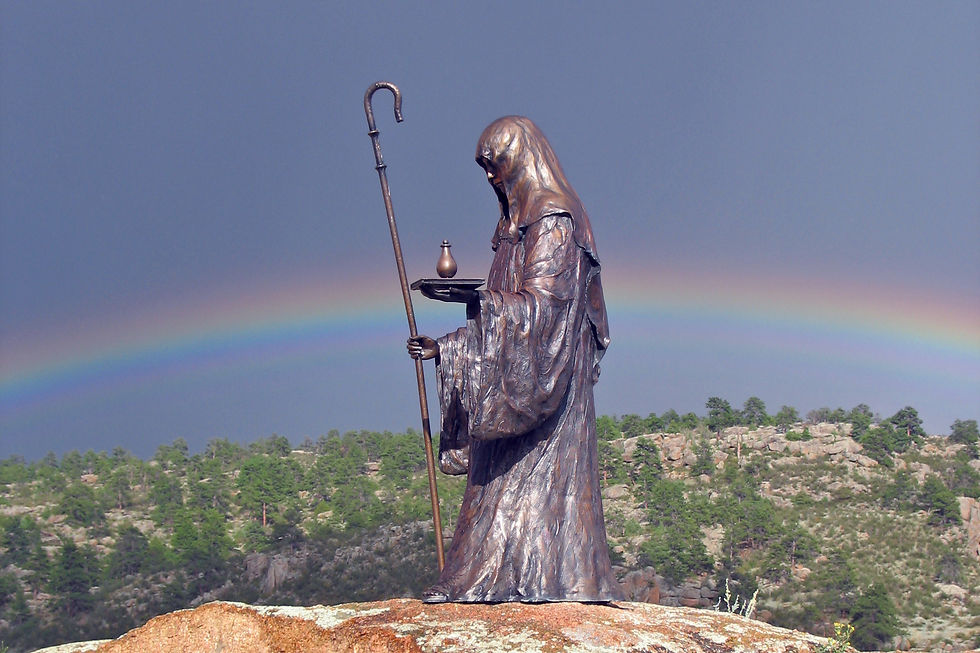
The Translation of Relics and the Miraculous Oil
Nearly a century later, around 870, Bishop Otgar of Eichstätt ordered renovations at Heidenheim. During exhumation for translation, workers discovered Walburga's body incorrupt and immersed in a clear, fragrant liquid.
This "oil" began flowing copiously from the rock slab where her relics rested. Collected in silver vessels, it proved efficacious against diseases—plagues, eye ailments, wounds, and demonic oppression.
In 893, relics were solemnly translated to Eichstätt, enshrined in the Church of the Holy Cross (now St. Walburga's). The oil continued flowing, especially from October 12 (her translation anniversary) to February 25.
Scientific analyses (including 20th-century tests) confirm the liquid resembles rock moisture but defies natural explanation—no source within the tomb, consistent flow despite dry seasons. The Church regards it as a true miracle.
Miracle books at Eichstätt record thousands of cures. During medieval plagues, oil-anointed cloths were distributed widely. Relics were shared with churches in Cologne, Antwerp, Brussels, and beyond.
Patronage, Devotions, and Walpurgis Night
Walburga's intercession is invoked against:
storms
rabies
coughs
famine
eye diseases
demonic possession
Sailors, farmers, and pregnant women seek her protection.
Her primary feast is February 25; May 1 commemorates translation, coinciding with ancient spring rites. Christianized vigils against evil spirits evolved into "Walpurgis Night"—now secularized in folklore but originally devotional.
Traditional devotions include:
novenas with her oil
pilgrimages to Eichstätt
blessing of fields on her feast
Benedictine litanies praise her as "lily of purity" and "model of obedience."

Modern Veneration and Benedictine Foundations
The Abbey of St. Walburga in Eichstätt remains a pilgrimage center. Benedictine nuns collect and distribute the oil worldwide, accompanied by prayer cards.
Benedictine daughters founded abbeys in the United States:
Colorado (1935)
Virginia
These maintain contemplative life and hospitality.
In 2026, devotion grows amid health crises and natural disasters. Reports from Eichstätt note increased requests for oil, with testimonies of healing from chronic illnesses and protection during storms.
Lenten Reflections: Healing Grace in Penitential Time
Lent's themes of purification and healing resonate deeply with Walburga. Her oil symbolizes sacramental grace flowing from Christ's wounds. As we fast and pray, we open ourselves to interior healing—cleansing sins that afflict the soul like spiritual plagues.
Her missionary detachment inspires Lenten almsgiving and sacrifice. Leaving homeland for Christ's sake, she models abandoning attachments.
In temptation's "storms," her intercession brings calm, reminding us: "Peace, be still" (Mk 4:39).
Practices to honor her during Lent:
Anoint with Walburga's oil (or holy water) while praying for healing.
Meditate on her vita during adoration.
Offer storms (literal or metaphorical) in union with her calming miracle.
Practice Benedictine hospitality—welcoming the stranger.
Pray litanies for protection against evil.
Catholic News and Current Events – Late February 2026
As Lent progresses, Walburga's patronage feels particularly relevant:
Increased Pilgrimages to Eichstätt — The abbey reports record visitors seeking oil amid global health concerns and severe weather events.
Benedictine Renewal Initiatives — Communities named for Walburga emphasize contemplative prayer in synodal listening sessions.
Lenten Healing Services — Many parishes incorporate anointing with blessed oils, invoking Walburga for physical and spiritual cures.
Missionary Commemorations — Dioceses highlight Anglo-Saxon evangelizers, tying to ongoing new evangelization efforts.
Charity Appeals — Catholic agencies distribute aid to storm-ravaged areas, invoking Walburga's protection.
These developments underscore the timeless power of saintly intercession.
A Perpetual Stream of Mercy
Saint Walburga's life and miracles proclaim God's tenderness toward suffering humanity. From stormy seas to plague-ridden villages, from ancient Germany to our troubled world, her healing oil continues flowing—a tangible sign that sanctity endures and grace abounds.
In Lent 2026, may we allow Christ's healing to penetrate our hearts through her prayers, emerging renewed at Easter.
Prayer to Saint Walburga
O glorious Saint Walburga, faithful daughter of England and light of Germany, you who calmed storms and healed the afflicted through Christ's power, pour forth your miraculous oil upon our wounded souls. Protect us from tempests of body and spirit, intercede for our healing, and guide us in missionary charity. Through your merits, may we trust ever more in divine providence. Amen.


Comments